
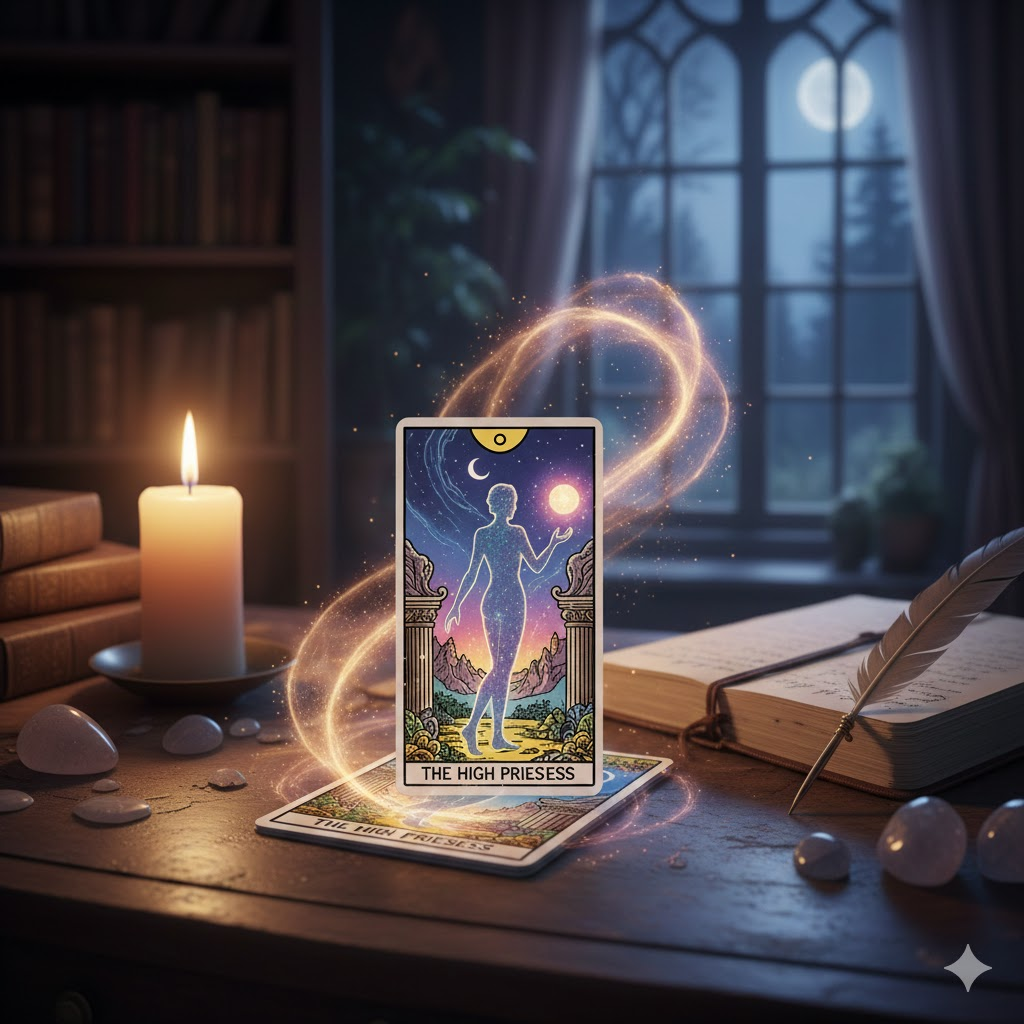
Have you ever looked at a Tarot card—perhaps the dazzling Emperor or the mysterious High Priestess—and wished you could literally step inside that world?
Tarot readings are a wonderful tool for gaining perspective, but for those seeking a deeper connection to the archetypes and symbols, there is a practice that can revolutionize your relationship with your deck: Tarot Pathworking.
It’s more than just reading the cards; it’s experiencing them.
What Exactly is Tarot Pathworking?
Simply put, pathworking is a form of guided meditation or active imagination where you mentally walk through the imagery, landscape, and characters of a single Tarot card.
Think of each card as a tiny, intricate map to a facet of human consciousness. Pathworking is the act of traveling that map.
Why Bother?
- From Head to Heart: Pathworking moves the card’s meaning from intellectual knowledge (what the book says) to personal, visceral experience (what the card feels like to you).
- Unique Insights: It helps you discover new, unique symbol meanings and messages that no book can offer.
- Meet the Archetypes: It’s the most effective way to encounter the profound archetypes represented by the Major Arcana personally.
Key Components: Preparing for the Journey
Pathworking is a sacred inner journey, and preparation is key to making the experience powerful and clear.
🧘 Setting the Stage (Physical)
- Find Your Sanctuary: Choose a quiet, comfortable space where you know you absolutely will not be interrupted for at least 20 minutes.
- Ritualize: Light a candle, burn your favorite calming incense (like frankincense or lavender), or play soft instrumental music. These sensory cues signal to your mind that it’s time to shift gears.
- The Gateway: Have your chosen Tarot card clearly visible in front of you. Place your hands on it briefly to connect your energy.
✨ Mindset (Mental)
- Choose Your Card: Select one you want to understand better, one that constantly confuses you, or one that has recently appeared repeatedly in your readings. The card is calling you.
- Silence the Critic: Commit to simply observing what happens. Pathworking is about feeling and experiencing, not judging the visuals or messages you receive.
- The Journal: Keep a journal and pen close by. You must record your experience immediately after returning, before the details fade.
Step-by-Step Pathworking Ritual
Ready to step across the border? Follow these six steps to begin your pathworking journey.
Step 1: Ground & Center
Close your eyes. Take three deep, slow breaths, focusing on the feeling of your body settling. Imagine roots growing from your seat down into the earth. Feel stable, safe, and ready.
Step 2: Observe the Gateway
Open your eyes and gaze intently at the card. Notice the colors, the atmosphere, and the composition. Mentally choose your entry point—this might be a door, a winding path, or you might simply walk through the border of the card’s image.
Step 3: Step Inside
Close your eyes again. In your mind, visualize yourself physically stepping across the border and into the world of the card. Use all your senses!
- What is the temperature? What is the weather like?
- What is the ground texture beneath your feet?
- What sounds do you hear?
- Is there a distinct smell in the air?
- Are people present? Who and what are they doing?
Step 4: Explore the Scene
Begin walking through the card’s landscape. Approach the characters, animals, or objects you see. Interact with the energy. You are permitted to ask questions of the figures you meet: “What wisdom are you guarding?” “Why is this symbol important?” “What message do you have for me right now?”
Step 5: Receive the Message
Do not force the interaction. The key is to listen and observe what the card’s world freely offers. The message might not be a direct answer; it could be a sudden feeling, a piece of music, a vibrant color, or a small gift given by a character. Trust what comes. Tapping into your “Clairs” during this time is going to help you receive the message.
Step 6: Return to Center
When you feel the journey is complete, thank the figures and the energy of the card for their guidance. Visualize yourself stepping back out of the card’s world, across the border, and back into your physical room. Open your eyes, take a few deep breaths, and gently stretch your body.
After the Journey: Integration and Reflection
The most important part of pathworking happens once you’ve returned.
- Immediate Writing: Do not hesitate. Grab your journal and pen and immediately record everything you experienced. Note the sensory details, the questions you asked, and the answers or symbols you received.
- Compare and Contrast: How does your personal, experiential journey align with the traditional or book meaning of the card? The places they differ are often the most valuable, offering a truly unique, personal insight into your current life situation.
- Integration: Understand that the wisdom you received is now part of you. It will influence how you interpret the card in future readings and how you navigate the real-life situations it governs.
Conclusion
Tarot pathworking is not just a technique; it’s an empowering way to turn your deck from a collection of images into a personal library of spiritual wisdom. It gives you the key to unlock the stories, secrets, and solutions that lie within the symbolic language of the Tarot.
What card will you pathwork first? Stepping into the Fool’s joyful unknown or the Hermit’s quiet solitude? Let me know in the comments below—I’d love to hear about your first journey!
ProTip: Use a Rider-Waite-based deck – once you understand the Rider-Waite, you can understand just about any deck within the tradition.