
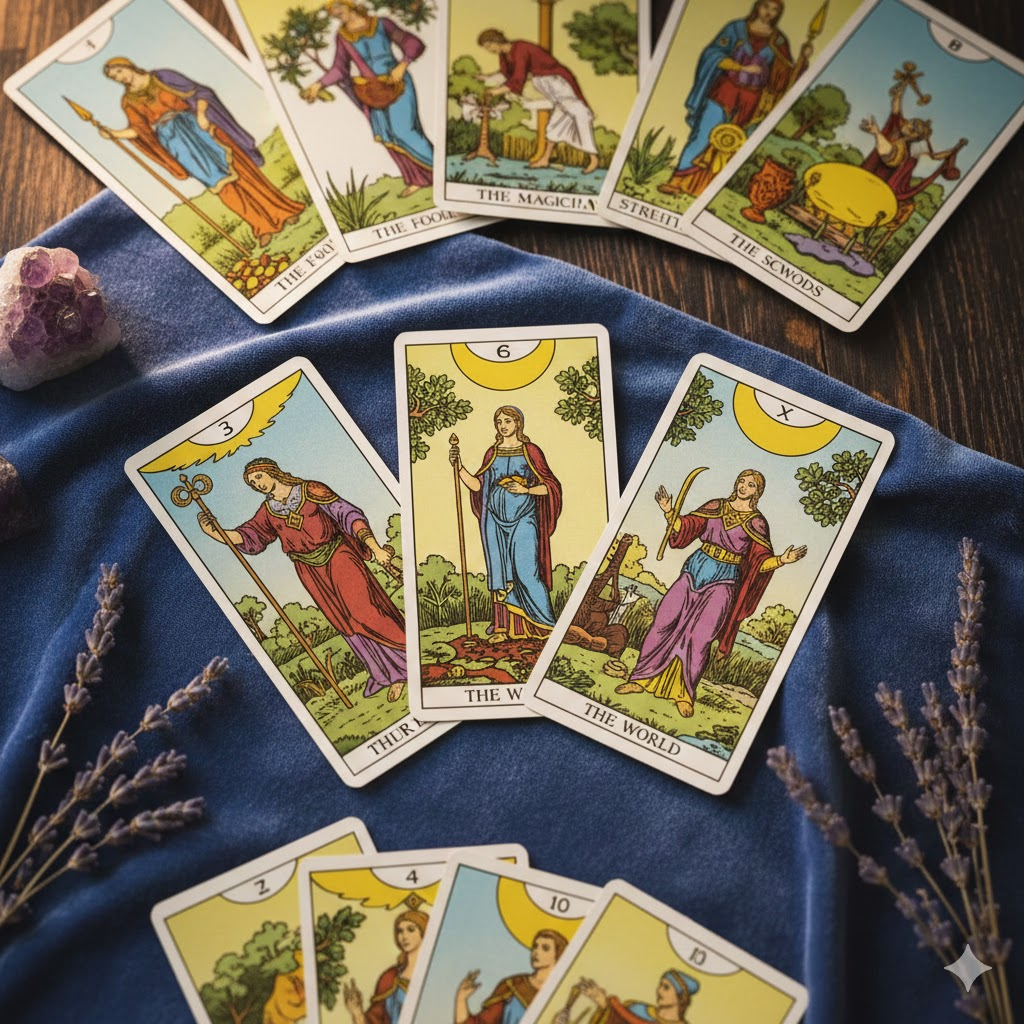
Choosing your first tarot deck is a rite of passage. It is exciting, but let’s be honest—it can also feel overwhelming when you’re staring at hundreds of options online or standing in the incense-clouded aisle of a metaphysical shop.
You might be asking: Do I need the classic one? Can I get the one with the cats? Does it matter?
Let’s cut the noise. Here is exactly what matters when you are just starting your tarot journey.
1. Busting the “Gift” Myth
Before we look at cards, let’s address the elephant in the room: The idea that you are not allowed to buy your own first tarot deck.
This is one of the most persistent myths in tarot, but it actually stems from history and economics, not magic.
Where did this come from?
- Historical Scarcity: Centuries ago, tarot decks were hand-painted luxury items commissioned by wealthy families. They were incredibly expensive and rare. For the average person, the only way to obtain one was to receive it as a gift or an inheritance.
- Secret Societies: In the 19th and early 20th centuries, tarot was often taught within secretive occult groups. You couldn’t just walk into a store and buy a deck; a mentor had to deem you “ready” and gift you the tools of the trade as part of your initiation.
Why you should ignore it today: We aren’t living in 15th-century Italy, and you likely aren’t joining a Victorian secret society. Today, this rule acts as a form of “gatekeeping” that delays your practice.
The best way to ensure you bond with your cards is to choose them yourself. Your intuition knows what you need better than anyone else does. Don’t wait for permission—buy the deck that calls to you.
2. Start With a Rider–Waite–Smith (RWS) Foundation
There are countless beautiful abstract and collage-style decks out there, but if you’re a beginner, you will save yourself a ton of confusion by sticking with a deck rooted in the Rider–Waite–Smith (RWS) tradition.
The Crucial Difference: Scenic vs. Pip
The primary reason RWS is essential for learning comes down to the Minor Arcana (the numbered cards from Ace to Ten).
| Deck Type | Minor Arcana Appearance | Why it Matters for Beginners |
| RWS (Scenic Deck) | Illustrations/Scenes that tell a story. Example: The Five of Pentacles shows two struggling figures outside a church. | The picture instantly cues the meaning (loss, isolation, poverty), making memorization intuitive. |
| Pip Deck (e.g., Tarot de Marseille) | Simple Arrangement of the suit icons. Example: The Five of Pentacles simply shows five coins. | You must memorize the meaning with no visual aid. This creates a much steeper learning curve for beginners. |
Why RWS is the Path to Meliora (Better):
- Universal Resources: 90% of beginner books, courses, and online resources reference RWS symbolism.
- Transferable Skills: If you learn RWS, you can read almost any other scenic deck later.
My Top Beginner Picks:
- Rider–Waite–Smith “Standard” Deck: The OG. Classic imagery, universal symbolism, and the gold standard for education.
- The Light Seer’s Tarot: A massive bestseller for a reason. It features modern, diverse, bohemian artwork that adheres to RWS meanings.
- The Modern Witch Tarot: A contemporary, fashion-forward reimagining that stays faithful to the original structure.
3. Vibe Check: Study the Imagery
A tarot deck isn’t just a tool; it’s a visual language. If you don’t like the “accent” of the language, you won’t want to speak it.
Before you click “Add to Cart,” look at the imagery of the difficult cards (like The Tower, Death, or the Ten of Swords).
- Do the images spark a narrative in your mind?
- Do you feel an emotional reaction, or do you feel flat?
- Is the art style clear enough that you can pick out symbols (colors, animals, landscapes)?
Pro Tip: Avoid “Minimalist” decks for your first purchase. While they look chic on Instagram, removing the symbols makes it very hard to learn the meanings.
4. The Physical Factor: Size and Shuffle

This is the most overlooked part of buying a tarot deck. If you can’t shuffle it comfortably, you’re going to end up annoyed and disconnected from your practice. I have a deck that I adore the imagery on so much, but I’m unable to handle it, so I never use it. It’s so unfortunate when this happens, but they make for great gift decks!
Consider these factors:
- Hand Size: Standard tarot cards are significantly larger than playing cards. If you have smaller hands, look for “Pocket Editions” or “Tin Editions.”
- Card Stock: Are the cards thick and stiff (hard to riffle shuffle) or flexible and silky?
- Finish: Glossy cards can sometimes stick together or glare under ring lights. Matte or “Linen” finishes are often easier to handle.
5. The Guidebook Matters
As a beginner, you are going to be relying heavily on the book that comes with the deck.
- The “LWB”: Many standard decks come with a “Little White Book”—a tiny stapled pamphlet with keywords. This is often not enough for a new learner.
- The Full Guide: Look for decks that come in a hard box with a chunky, comprehensive guidebook. These often include journal prompts, spread ideas, and deep dives into the card meanings.
6. In-Person vs. Online: The Crucial Research
Before you buy, you need to conduct the final physical check. Where you shop will determine how you conduct this crucial test.
Shopping In-Store: Use the Sample Cards
If you are lucky enough to shop at a local metaphysical store, take advantage of the sample decks they often keep behind the counter. This is the gold standard for testing a deck.
- Pick up the cards. Feel the weight and density.
- Attempt a shuffle. Can you manage an overhand shuffle comfortably?
- Look closely. Are the colors vibrant and clear under the light?
There is no better way to know if a deck is truly right for your hands and eyes.
Shopping Online: Do Your Digital Homework
If you are buying online, you must rely on the experience of others:
- Watch “Flip Through” videos on YouTube (search: “Deck Name + Flip Through”) to see the cards in action.
- Check the creator’s website or publisher for a full gallery preview.
- Look for customer reviews that include photos or comments about the card stock quality.
⚠️ Warning: Beware of Counterfeits Be careful with cheap decks on sites like Temu, AliExpress, or random third-party Amazon sellers. If a popular indie deck usually costs $50 but you see it for $9, it is a counterfeit. Fakes have terrible paper quality, no guidebook, and poor energy. Always support the artists and buy the real thing.
Final Thoughts: Choose What Helps You Learn
Your first deck doesn’t need to be the fanciest, rarest, or trendiest. It needs to be your teacher.
Choose the one that feels like a friend you can talk to. Start with the RWS foundation, learn the rules, and then—once you’re confident—you can break them with all the gorgeous niche decks your heart desires.
Not ready to buy yet? [Book a professional reading with us] to experience the cards in action first.